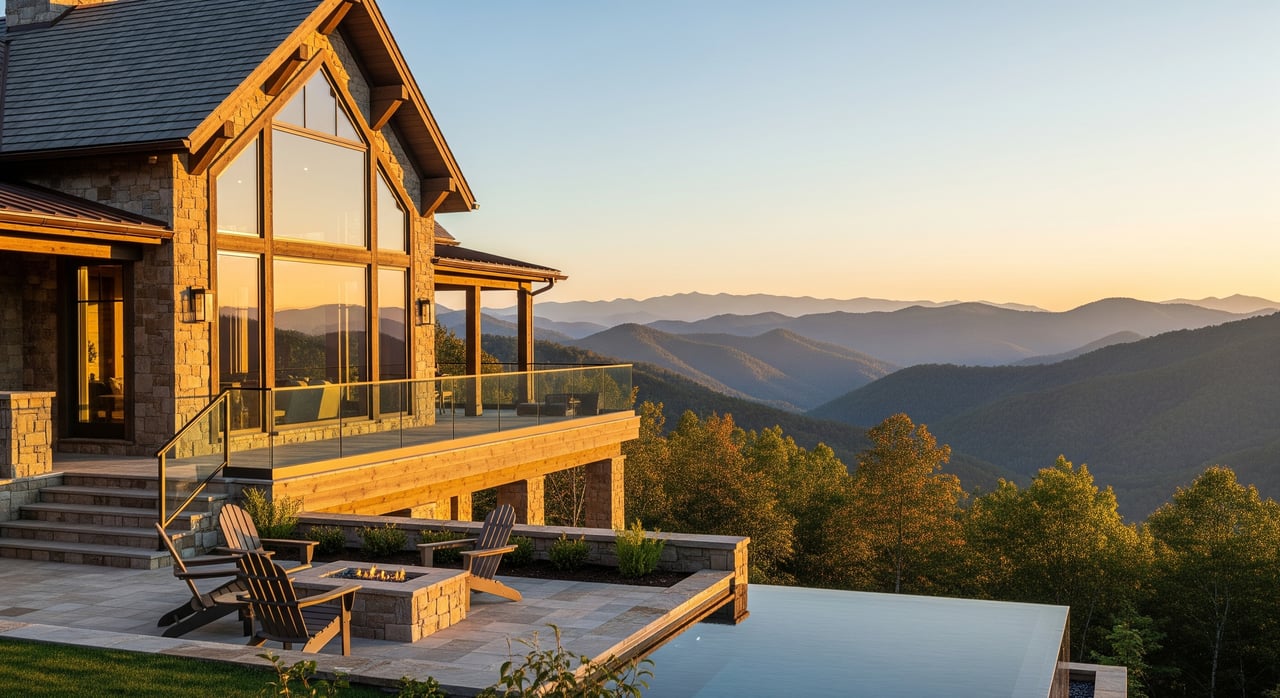
Dreaming of a mountain cabin you can slip away to on weekends, or a place that could also earn income when you are not here? You are not alone. Buyers across the Southeast love Murphy and Cherokee County for river, lake, and ridge views, but the financing rules can feel confusing. In this guide, you will learn the key differences among second‑home and investment loans, what lenders expect, and how local factors in the Murphy area can affect your plan. Let’s dive in.
Second home vs investment: why it matters
Lenders define property types differently, and that definition shapes your loan options, down payment, and even how often you can rent the home.
Primary, second home, investment
- Primary residence: the home you live in most of the year. It gets the lowest rates and down payments because occupancy lowers risk.
- Second home: a property you use personally, not as your main dwelling. Lenders typically expect it to be suitable for year‑round use and for you to occupy it for parts of the year. Many lenders limit continuous renting.
- Investment property: a home purchased mainly for income. This includes long‑term rentals and, in many cases, properties used regularly as short‑term rentals. Investment loans usually require higher down payments, stronger credit, and higher rates.
How classification changes your plan
- Second‑home loans can offer better pricing than investment loans, but they often come with rules around rental use. If you plan to rent frequently on a nightly or weekly basis, lenders may classify the home as an investment.
- Investment loans allow regular rental activity, including short‑term rentals, but expect higher down payments and stricter reserve requirements.
- Choosing the right classification up front helps you avoid surprises with underwriting or post‑closing restrictions.
Loan options near Murphy
Most buyers in the Murphy area use conventional loans, while high‑end estates may need jumbo financing. If you plan to operate a short‑term rental or prefer not to document traditional income, a DSCR or other non‑QM loan may fit.
Conventional second‑home loans
- What it is: a conforming mortgage that meets Fannie Mae or Freddie Mac standards and county loan limits.
- When it fits: you will use the home personally, not primarily as a rental, and you can document income, assets, and credit.
- Typical terms: many lenders allow around 10 to 20 percent down for second homes. Rates are usually a bit higher than for primary residences. Lenders often ask for 6 to 12 months of reserves.
- Rental limits: continuous short‑term renting is often restricted on second‑home loans. If regular STR income is central to your plan, consider investor options.
Jumbo loans
- What it is: financing above the annual conforming loan limit. Most Murphy‑area purchases fit inside conforming limits, but larger waterfront or mountain‑estate properties may not.
- Typical terms: lenders often require 10 to 20 percent down for second homes and may require 25 percent or more for investment use. Expect higher credit score targets and substantial reserves.
- Pricing: jumbo rates can be similar to or slightly higher than conforming, depending on market conditions and your profile.
DSCR and other non‑QM investor loans
- What it is: financing based on the property’s income rather than W‑2s or tax returns. The key metric is DSCR, which compares net operating income to the mortgage payment. Many lenders look for 1.0 to 1.25 or higher.
- When it fits: you plan to run the home as a short‑term or long‑term rental and want underwriting that focuses on rental income and market comps.
- Typical terms: 20 to 35 percent down is common, with higher rates and fees than conventional loans. Programs vary widely. Some accept actual short‑term booking history, while others use market rent estimates.
FHA, VA, USDA at a glance
- FHA: generally for primary residences only. Second homes are not typical.
- VA: intended for primary residence occupancy. Not for second homes.
- USDA: requires primary residency and has geographic and income limits.
What lenders expect: down payment, credit, reserves
Understanding cash and documentation needs early can save you time and reduce stress.
Typical cash ranges
- Second homes: many lenders allow 10 to 20 percent down, with 6 to 12 months of reserves.
- Investment properties: 15 to 25 percent down for single‑unit rentals, 25 percent or more for multi‑unit. Reserves are often higher.
- Jumbo: 10 to 25 percent down for second homes, sometimes 20 to 30 percent for investment use, with robust reserves.
- DSCR/non‑QM: 20 to 35 percent down is common. Minimum DSCR thresholds affect the maximum loan.
Documents to gather
- Identification and proof of your primary residence, such as a driver’s license and recent utility bills.
- Income: recent pay stubs and W‑2s if employed; two years of business tax returns, and possibly a profit and loss statement if self‑employed; retirement income statements if retired.
- Assets: 2 to 3 months of bank or retirement statements showing seasoned funds for down payment and reserves.
- Credit: full credit report with explanations for any derogatory items.
- Insurance and HOA: preliminary insurance quotes and HOA or condo documents if applicable.
Tips for out‑of‑state buyers
- Be clear on your primary residence. Keep IDs, tax returns, and bills handy to document where you live.
- Expect questions about distance and intended use. If the second home is far from your primary, be ready to explain your plan.
- Prepare for source‑of‑funds reviews, especially for large transfers. Gift funds may require a gift letter and proof of transfer.
- Build a strong reserve position. Lenders often want more reserves for out‑of‑state owners or investors.
Local factors that affect financing
Murphy and Cherokee County are beloved for riverfront cabins, lake access, and ridge‑top views. Those charms come with a few underwriting considerations.
Short‑term rental rules and taxes
Before you assume nightly rentals are allowed, check Murphy town and Cherokee County rules on short‑term rentals, permitting, and lodging or occupancy taxes. Lenders also view STRs differently. If your plan depends on STR income, make sure your loan type supports that use and ask how the lender will evaluate rental projections.
Insurance and flood zones
Mountain homes can carry higher insurance costs due to wind or storm risk. Properties near rivers or lakes may sit in flood zones, and lenders can require flood insurance if the parcel is mapped in a higher‑risk area. If you plan to operate an STR, confirm your insurer covers that use. Some carriers require specific endorsements.
HOA and condo restrictions
HOA and condo communities often have rental caps or length‑of‑stay rules. These rules can affect both your revenue model and loan eligibility. Review HOA documents early so your financing and rental expectations align.
Appraisals in rural markets
Comparable sales can be thin in rural or unique mountain settings. Appraisers may pull comps from a wider area or apply adjustments, which can influence loan‑to‑value. Build a buffer in your timeline and budget in case the appraisal comes in conservatively.
Quick buyer checklist
- Decide how you will use the home: personal second home or rental investment.
- Choose a loan path that matches your use: conventional second‑home, jumbo, or DSCR/investor.
- Confirm whether your price will be within conforming loan limits or require a jumbo loan.
- Gather documentation: IDs, last 2 years of tax returns, recent pay stubs, and 2 to 3 months of bank and retirement statements.
- Shop multiple lenders and compare quotes for down payment, reserves, and rates. Include a conventional option and, if planning STRs, a DSCR option.
- Verify local STR rules and any lodging taxes. Review HOA or condo rules for rental caps.
- Obtain homeowners and, if needed, flood insurance quotes. Confirm STR coverage if applicable.
- Get a pre‑approval that matches the intended occupancy and loan type.
Smart lender questions to ask
- How do you classify this property based on my intended use, and what restrictions apply?
- What down payment and reserves do you require for this loan type and my credit score?
- If I plan to do short‑term rentals, which loan types do you offer that allow that use?
- For DSCR, what DSCR threshold do you require, and how do you calculate it for a short‑term rental?
- For jumbos, what credit score and reserve minimums should I plan for?
- How will you treat HOA rental caps or special assessments in underwriting?
- What would cause my interest rate or fees to change before closing?
Next steps
If you want a place to unwind near Murphy, you have solid paths to financing. The key is to match your loan to your real‑world use and to start early on documentation, insurance quotes, and local rule checks. With the right plan, you can enjoy the mountains and protect your investment at the same time.
If you would like a local, hands‑on guide to help you compare options, vet neighborhoods, and connect with lenders who fit your goals, reach out to Allison Ralph. You will get responsive, practical support from offer to closing.
FAQs
What counts as a second home in Murphy?
- A second home is a property you use personally during the year, suitable for year‑round occupancy, and not held primarily for rental income.
Can I use a conventional loan if I plan some Airbnb use?
- Many lenders limit continuous short‑term rentals on second‑home loans, so frequent STR use may push you into an investment or DSCR loan.
How much down payment do I need for a second home?
- Many lenders allow 10 to 20 percent down for second homes, with reserves of 6 to 12 months of housing payments.
What is a DSCR loan and when is it useful?
- A DSCR loan evaluates property income relative to the payment and is often used by STR or long‑term rental investors who prefer not to document traditional income.
Are FHA or VA loans available for vacation homes?
- FHA and VA loans are generally for primary residences, so they are not typical options for second homes in the Murphy area.
What special issues affect mountain properties and insurance?
- Mountain homes can have higher premiums due to wind or storm risk, and homes near rivers or lakes may require flood insurance if mapped in a higher‑risk zone.
I live out of state. Will lenders treat me differently?
- You can buy from out of state, but lenders often expect stronger reserves and clear proof of your primary residence, plus seasoned funds for your down payment.