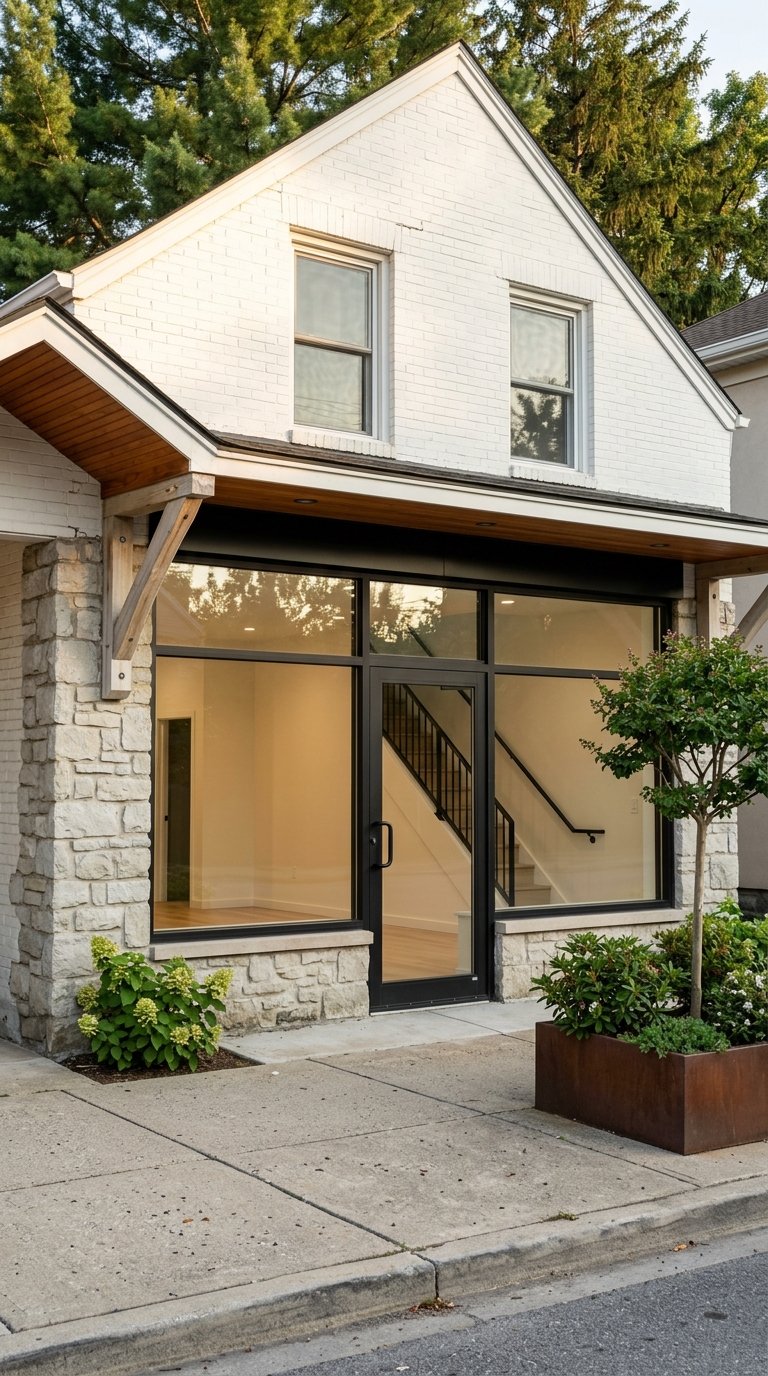
Thinking about buying commercial property in Andrews, NC? In a small mountain town, the opportunity can be real, but so can the guesswork. If you are looking at Main Street storefronts, flex space, or a live-work building, you need more than a headline price. You need a clear view of demand, zoning, access, and risk. That is exactly what this guide will help you sort through. Let’s dive in.
Why Andrews Draws Commercial Interest
Andrews is a small market, and that matters. According to Census Reporter’s Andrews profile, the town has 1,998 residents, a median age of 46.6, and a median household income of $37,061. That means most commercial property here depends on a narrow local customer base, plus regional traffic, tourism, and owner-operator demand.
Even so, Andrews has several practical advantages. The town says it is served by water, sewer, power, and communications, and it sits within driving reach of Chattanooga, Knoxville, Asheville, and Atlanta, according to the Town of Andrews economic development information. For buyers who want a value-priced small-town foothold, that combination can be quite appealing.
Another factor is supply. The adopted Andrews Town Plan 2035 notes that the town sits in a valley with steep ridges, public lands, and Eastern Band of Cherokee lands around it, which limits buildable area. In plain English, there is only so much space to go around.
Main Street Investment Potential
Main Street is still the heart of the conversation in Andrews. The town plan explains that US 19 runs through downtown, giving many properties visibility that can support retail, food service, offices, and other customer-facing uses. In a small town, visibility and ease of access can matter just as much as the building itself.
The same plan describes the west end of Main Street as the largest commercial area, with groceries, pharmacies, restaurants, furniture, clothing, specialty shops, and services. It also notes that there is vacant commercial space and redevelopment potential. That creates openings for investors who are comfortable improving older space or repositioning a property.
You will also see different character depending on where you look. The east end is described as more auto-oriented, with a cluster of vehicle-related uses. So while people often say “Main Street” as if it is one thing, the fit between a property and your intended use is very site-specific.
Commercial Property Types You May Find
Andrews has a thin inventory, but not a one-note one. Based on current listings and the town plan, buyers may come across:
- Main Street retail buildings
- Former restaurant space
- Professional or medical office buildings
- Mixed-use properties
- Live-work spaces
- Flex or light industrial buildings
- Commercial land for future development
- Small multifamily buildings in commercial zoning
Current listings show just how varied the options can be. For example, 5 Main St is listed at $500,000 for a vacant 2,376-square-foot quick-service restaurant on 1.59 acres with Main Street frontage. 460 Main St is listed at $349,000 and marketed for uses such as office, retail, spa, or live-work. 1017 Main St is a larger mixed-use, office, and retail property at 9,500 square feet.
That range can be useful if you are an owner-user, a local business operator, or an investor looking for a modest mountain-town asset rather than a large institutional deal.
What the Current Market Suggests
The commercial market in Andrews is thin. According to LoopNet’s Andrews retail search, there are only a handful of active commercial listings in 28901, including very limited retail and industrial inventory. That means you should expect a small comp set, limited turnover, and pricing that can vary widely by property type and condition.
This is not a market where you can rely on broad averages alone. LoopNet reports an average asking price around $151 per square foot on its retail page, but that figure is based on a very small sample. In a town this size, one unusual building can skew the picture rather dramatically.
A few listings help show the spread:
| Property | Asking Price | Notes |
|---|---|---|
| 5 Main St | $500,000 | Vacant restaurant, 2,376 SF, 1.59 acres |
| 61 Fairview Rd | $185,000 | Two-unit apartment building, zoned C-3 |
| 460 Main St | $349,000 | Renovated Main Street building |
| 995 Main St | $449,000 | Refurbished office-style building with ballroom area |
| 6785 Airport Rd | $399,800 | Flex building, 4,410 SF |
| 00 Airport Rd | $79,999 | 4.49 acres of commercial land |
The takeaway is simple: Andrews is a market where each property deserves its own underwriting story.
Zoning Comes First, Not Last
If you remember only one thing from this article, let it be this: verify zoning before you fall in love with the idea. The Town of Andrews Planning and Zoning Department explicitly tells buyers and tenants to contact staff before buying, leasing, or starting a project. That is wise advice, and in a market like this, it is non-negotiable.
The town’s forms and documents include the zoning ordinance, zoning application, and flood ordinance, which makes it clear that use verification, site review, and floodplain review should be part of your earliest due diligence. The long-range town plan outlines several commercial district concepts, including Main Street, Mixed Use, US 74 Commercial, Vehicle Service and Repair, and Industrial, but those planning categories are not a substitute for confirming the current code and parcel status.
Parcel location matters too. One Main Street property is listed as HB, another as C-3 Central Business, and an Airport Road tract is marketed as being outside city limits, where the listing says Cherokee County has no zoning. That means you need to confirm whether a property is inside town limits, within the town zoning jurisdiction, or outside both before you assume anything about permitted use.
How to Underwrite Conservatively
Andrews can make sense for the right buyer, but it is not the place for rosy spreadsheets and crossed fingers. With a modest local income base and limited inventory, your underwriting should lean conservative from the start. In a small town, a vacancy can last longer, a tenant improvement can cost more than expected, and the resale pool can be narrower.
I would pay close attention to these basics:
- In-place income versus projected income
- Realistic vacancy assumptions
- Tenant improvement costs
- Maintenance and capital reserves
- Parking, access, and frontage
- Utility availability and connection needs
- Exit pricing if you plan to sell later
One current flex listing, 6785 Airport Rd, advertises a 9.32% pro forma cap rate. That may be useful as a starting point, but it should not be confused with verified in-place performance. Seller projections are not the same thing as actual net operating income.
Risks Worth Reviewing Early
Every market has its quirks. Andrews has a few that deserve proper attention before you buy.
Floodplain and site review
The town maintains a flood ordinance within its planning documents, so floodplain review should be an early checkpoint, especially for redevelopment, additions, or land purchases. A property that looks straightforward online can become much less straightforward once site constraints enter the picture.
Wildfire exposure
In March 2025, the town issued wildfire-related emergency measures. That does not mean every property is a problem, of course, but it does mean insurance, access, and emergency considerations deserve a closer look than many buyers expect.
Utility and annexation questions
The town plan says water and sewer service areas extend beyond town limits in some cases, and annexation or owner petitions can matter for certain utility connections. For fringe parcels, adaptive reuse, or land development, that can affect both timeline and cost.
What Makes a Good Fit in Andrews
In my view, the best commercial opportunities in Andrews tend to be practical ones. Think owner-operated businesses, service retail, professional office space, modest mixed-use buildings, and live-work setups that match the town’s scale. Buildings with frontage, decent parking, and a use that fits the immediate area usually have the clearest path forward.
This is also a market where local knowledge matters enormously. The town is small, the inventory is thin, and the details can change block by block. A clever idea is lovely, but a feasible idea is better.
If you are exploring Main Street or other commercial property in Andrews, I can help you look beyond the list price and into the real questions that shape the deal. From identifying the right property type to helping you think through location, use, and local process, I bring a practical, hands-on approach to mountain market investing. If you are ready to talk through an opportunity, reach out to Allison Ralph.
FAQs
What types of commercial property are available in Andrews, NC?
- Andrews listings can include Main Street retail buildings, office space, mixed-use property, flex buildings, commercial land, former restaurant space, and some live-work opportunities.
Is Main Street in Andrews, NC a good place to invest?
- Main Street can offer visibility and redevelopment potential, but the right fit depends on frontage, parking, access, zoning, and whether your intended use matches that specific part of town.
How important is zoning when buying commercial property in Andrews, NC?
- Zoning is critical, and the town specifically advises buyers and tenants to verify use, permitting, and floodplain requirements with Planning and Development before purchasing or leasing.
Are commercial property prices in Andrews, NC consistent?
- No. Andrews has a thin commercial market, so prices can vary widely by building type, condition, size, location, and permitted use.
What risks should investors review before buying in Andrews, NC?
- Key items include zoning verification, floodplain review, wildfire exposure, utility service questions, vacancy assumptions, and the difference between seller projections and actual income.