Thinking about buying a cabin in Murphy and turning it into a short-term rental? You’re not alone. With lakes, trails, and mountain views that steal the show every season, Cherokee County draws steady vacation traffic. The key is buying smart so your dream place also pencils out as a business. In this guide, you’ll learn the local rules, taxes, revenue patterns, lending and insurance basics, and a clear due diligence path to help you move with confidence. Let’s dive in.
Why Murphy works for STRs
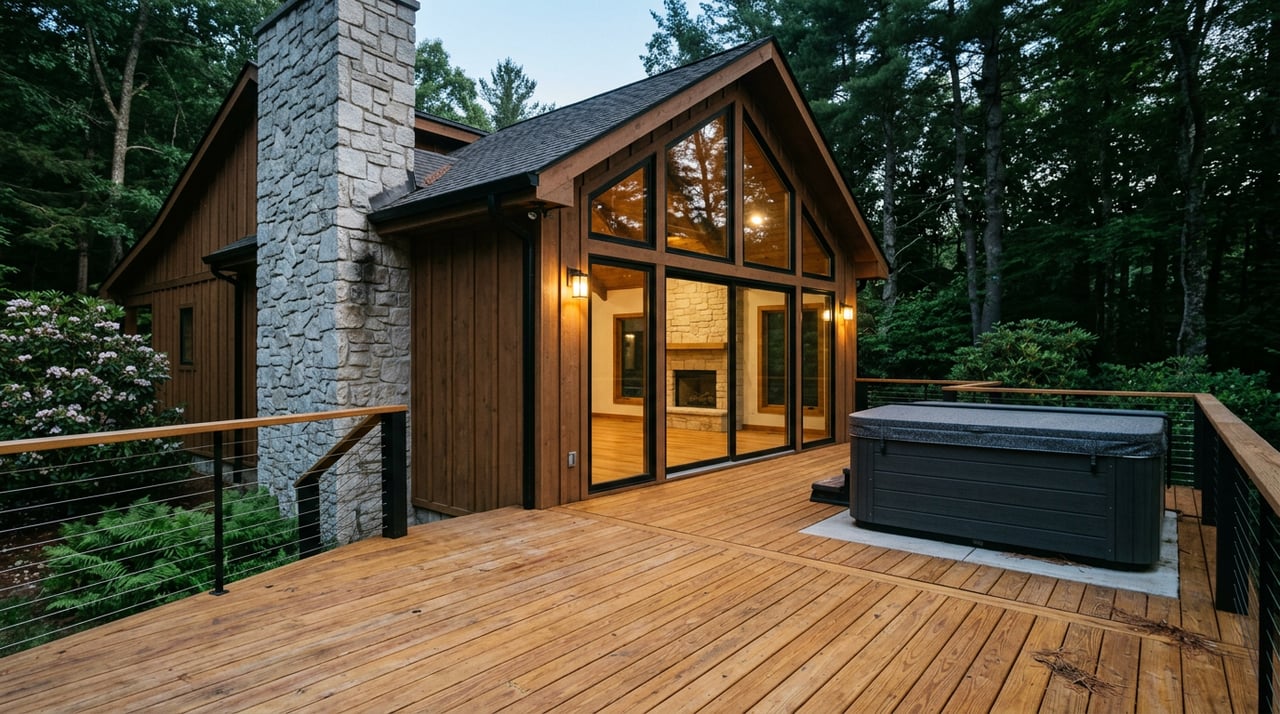
Murphy sits in a sweet spot for outdoor lovers and easy weekend escapes. Guests come for Hiwassee Lake and river recreation, national-forest access, and regional attractions like the Harrah’s Cherokee Valley River Casino & Hotel. Those draws support seasonal demand that many hosts tap into. You’ll see plenty of cabins and small single-family homes with hot tubs and outdoor living spaces as typical listings.
Public home-value indexes place typical Murphy home values in the low-to-mid $200s, which helps entry numbers compared to bigger mountain markets. Still, success depends on matching the right property to the right guest profile and pricing it to local seasons.
For a sense of what brings visitors, look at area fishing and boating resources through the local chamber’s overview of water recreation and access points. The outdoors and lake life are core to guest itineraries and marketing angles.
Know the rules in Cherokee County
Short-term rentals are allowed in much of Cherokee County, but you have responsibilities. Focus on these four items first.
County occupancy tax: 4% on stays under 90 days
Cherokee County requires hosts to register with the Finance Office and collect a 4% occupancy (lodging) tax on rentals of fewer than 90 days. Monthly returns are required, even if you had no bookings. Penalties apply for failure to register or remit. Review the county’s guidance for registration steps and filing details in the county’s Rental Accommodations tax information.
- See: Cherokee County occupancy tax rules and forms in the county’s official PDF.
NC Vacation Rental Act: written agreements
North Carolina’s Vacation Rental Act (Chapter 42A) governs stays under 90 days. You must use a written vacation-rental agreement that meets the statute’s content and notice rules, including how funds are handled and what guests must be told. Whether you self-manage or use a broker, make sure your agreements and procedures align with state law.
- See: North Carolina Vacation Rental Act (Chapter 42A).
Zoning, building codes, and HOA rules
There is no evidence of a separate Town of Murphy permit or ban that sits on top of county requirements. That said, zoning, building codes, and private covenants may restrict rentals on a parcel-by-parcel basis. Always confirm permitted use for the exact lot and check any HOA or CC&R rules for minimum stays, parking, or guest limits.
- Start with the Town of Murphy planning and code pages for parcel questions.
Marketplace facilitator and sales tax
Large booking platforms often collect and remit state sales tax, but that does not guarantee they remit Cherokee County’s occupancy tax for you. Confirm, in writing, what each platform handles for your exact listing and register with the county if needed. State-level tax guidance for vacation rentals explains how marketplace rules work and where hosts remain responsible.
- Learn more about North Carolina’s marketplace-facilitator tax rules.
What the Murphy STR market looks like
Property types and guest appeal
The bread-and-butter listing here is a small cabin or cottage, often with a view, hot tub, and strong outdoor setup. River or lake access is a plus. Guests value proximity to trails, water, and regional attractions, so a simple map in your listing highlighting those features helps conversions.
Seasonality and occupancy patterns
Murphy and greater Cherokee County are strongly seasonal mountain markets. Analytics point to peak demand in late spring and summer, with a strong fall shoulder around leaf season. Some snapshots show autumn weekends, especially October, as local revenue highs. Typical median occupancy bands for the area often fall around 40 to 60 percent for mid-tier listings, while top performers do better. Use platform calendar data and like-for-like comps to fine-tune your pricing by month.
- See a Cherokee County market snapshot for seasonality context.
Pricing and expected revenue
Modeled estimates show middle-earner annual revenues in the low-to-mid $20,000s for Murphy-area STRs, with average nightly rates in the low-to-mid triple digits for well-appointed cabins. There is wide dispersion across properties, and the top tier can earn multiples of the median. Treat model data as directional and cross-check with platform comps and any available management records.
- Explore Murphy-level modeled performance data and maps.
Underwrite like a pro
Build a conservative pro forma
Base your numbers on comparable properties and current calendars. A simple structure works:
- Revenue: expected nights booked × average daily rate (ADR).
- Variable costs: cleaning/turns, supplies, platform fees, laundry, restocking.
- Fixed costs: mortgage (if financed), property taxes, insurance, utilities, internet, pest/yard service.
- Taxes: state sales tax and the 4% county occupancy tax, plus any local sales tax components.
- Management: property manager or co-host fees, if used.
- Reserves and capex: set funds aside for hot tub service, deck staining, appliance replacement, roof/HVAC over time.
When you do not have prior booking history for the exact property, combine multiple data sources and discount your top-line by a conservative margin to cover uncertainty.
Financing realities for STR buyers
Loan programs have different rules for short-term rental use and owner occupancy. FHA financing typically requires you to move in within 60 days and occupy for about a year, which limits its use for a property you plan to list immediately as a dedicated STR. Multi-unit FHA options can work if you live in one unit. Conventional and portfolio lenders may underwrite with STR intent, but disclose your plan early and confirm documentation needs.
- Read FHA occupancy and program basics from HUD.
Taxes and operating costs you must plan for
Hosts must account for platform commissions, turnovers, utilities, insurance, supplies, repairs, and management fees. On the tax side, the 4% Cherokee County occupancy tax applies to stays under 90 days and is in addition to state sales tax. Marketplace platforms may remit state sales tax for you, but you must verify any local occupancy tax treatment and register with the county if required.
- Review Cherokee County’s occupancy tax guide for registration and filing.
Insurance and liability
Many standard homeowners policies exclude business activity and do not fully cover guest-caused damage or guest liability. You will likely need a short-term rental endorsement or a policy designed for vacation rentals. Platform protections are not a substitute for proper coverage and often come with limits and exclusions. Ask for explicit, written confirmation of coverage for paid short stays and guest liability.
- See an example of host-sharing insurance considerations.
Neighborhood and housing considerations
What research says
Academic studies find that growth in STR listings can raise local rents and home prices in tourist-attractive locations, though effects vary by place and method. In some cities, tighter STR rules have been followed by small decreases in rents and prices near major attractions. This research suggests that concentrated STR activity can reduce long-term rental supply and put upward pressure on housing costs.
- Read a summary of STR research findings.
Local context and good-neighbor hosting
Murphy’s demand is anchored in outdoor recreation and regional attractions, which can concentrate visitor stays around certain corridors and seasons. As a host, you can support neighborhood quality by setting quiet hours, providing clear parking plans, adding noise-monitoring devices that respect privacy, and keeping a local contact on call to respond quickly. A well-run STR tends to stay welcome.
Murphy buyer due diligence checklist
Use this quick list to keep your purchase on track:
- Confirm parcel zoning and permitted use with the Town of Murphy or Cherokee County planning office. Do not rely on assumptions.
- Review HOA documents (if any) for rental restrictions, minimum stays, parking, guest caps, and owner-occupancy requirements.
- Register with the Cherokee County Finance Office for the 4% occupancy tax and confirm what your booking platform will or will not remit for your exact listing. Get it in writing.
- Use a written vacation-rental agreement that meets the North Carolina Vacation Rental Act requirements.
- Obtain a policy or endorsement that explicitly covers paid short stays and guest liability; aim for at least $1 million in liability coverage when available.
- Discuss financing early. If you plan to use FHA or another owner-occupant product, confirm occupancy rules; consider conventional or portfolio options if the property will operate as an STR.
- Underwrite conservatively with multiple comp sources. Pull platform calendars, revenue histories (if available), and management quotes. Adjust for seasonality and vacancy.
- Plan for good-neighbor operations: quiet hours, parking rules, guest guides, and a responsive local contact or manager.
Your next step
If Murphy is calling your name, pair the lifestyle you want with a sound plan that fits local rules, taxes, and seasonality. A targeted search for cabins and cottages that match guest demand can set you up for stronger performance from day one. When you are ready to explore on-the-ground options or want help pressure-testing a pro forma, reach out to a trusted local guide. Start a conversation with Allison Ralph to map properties, verify parcel-specific details, and build a confident plan to buy and host well.
FAQs
Do you need a special permit to run a short-term rental in Murphy, NC?
- There is no evidence of a separate Town of Murphy STR permit or ban beyond county and state requirements, but you must verify parcel-level zoning, building codes, and any HOA rules before you buy.
How much lodging tax will I collect on bookings in Cherokee County?
- Cherokee County requires a 4% occupancy tax on rentals of fewer than 90 days, collected from guests and remitted monthly in addition to state sales tax; hosts must register with the county.
What does North Carolina’s Vacation Rental Act require from hosts?
- For stays under 90 days, you must use a written vacation-rental agreement that meets state content and notice rules and follow the statute’s handling-of-funds and consumer protections.
Who remits sales and occupancy taxes if I list on a major booking platform?
- Marketplace platforms often remit North Carolina state sales tax, but treatment of the county’s 4% occupancy tax varies; confirm in writing for each listing and register with the county if needed.
What are typical busy seasons and occupancy rates in Murphy?
- Late spring and summer are peak, with a strong fall leaf season; typical median occupancy for mid-tier listings often ranges around 40–60%, with top performers higher, based on market snapshots.
Can I use FHA financing to buy a home I plan to list as an STR?
- FHA loans generally require you to move in within 60 days and occupy for about a year; they are not designed for immediate dedicated STR use. Consider conventional or portfolio loans if you do not plan to occupy.
[Links referenced above]
- Cherokee County occupancy tax PDF: https://www.cherokeecounty-nc.gov/DocumentCenter/View/286/Rental-Accommodations-Occupany-Tax-Information-PDF
- North Carolina Vacation Rental Act (Chapter 42A): https://house.ncleg.gov/EnactedLegislation/Statutes/HTML/ByChapter/Chapter_42A.html
- Town of Murphy planning/code: https://www.townofmurphync.com/
- NC vacation-rental tax overview (marketplace rules): https://www.avalara.com/mylodgetax/en/resources/vacation-rental-tax-guides/north-carolina.html
- Cherokee County seasonality snapshot: https://www.airroi.com/report/world/united-states/north-carolina/cherokee-county
- Murphy performance estimates: https://www.strprofitmap.com/analysis/state/NC/murphy
- Insurance considerations for home sharing: https://www.allstate.com/resources/home-insurance/home-sharing
- FHA program basics and occupancy: https://www.hud.gov/hud-partners/single-family-fha-info
- Research summary on STR housing impacts: https://planning.org/knowledgebase/resource/9204262